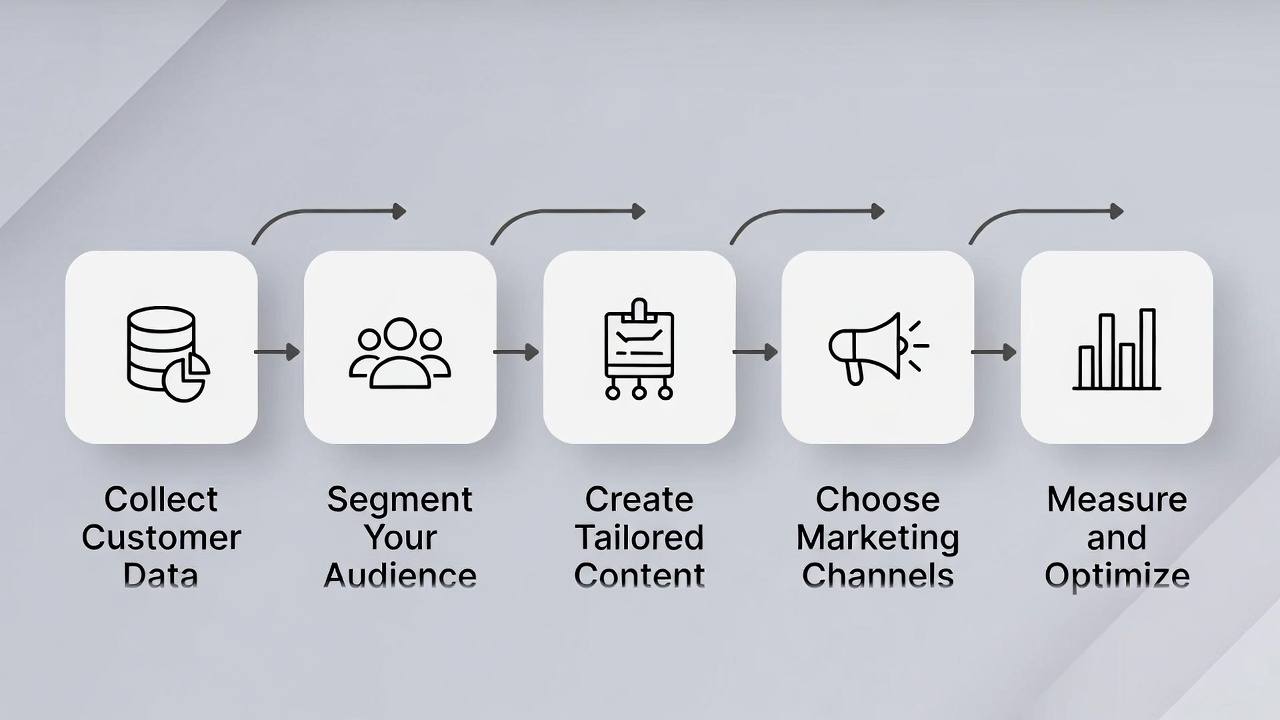

Personalized marketing means using customer data to create messages that speak directly to people. First, it helps businesses connect better with their audience. Moreover, it can boost sales and loyalty. However, many companies struggle to start. Therefore, this guide offers simple steps to build one that works. For example, think of Netflix suggesting shows you like. That is personalization in action.
What Is Personalized Marketing?
To begin with, personalized marketing tailors content to individual needs. Next, it uses info like age, location, and past buys. Additionally, it makes customers feel valued. As a result, engagement rises. For instance, emails with a person’s name often get more opens. Furthermore, in 2025, brands win by making experiences feel human. Yet, it differs from basic grouping. Instead, it goes deeper with real-time data.
Step 1: Gather Customer Data
First of all, collect useful info about your customers. For example, track their website visits and purchases. Moreover, use tools like surveys or sign-up forms. However, always ask for permission to build trust. Additionally, combine data from emails, social media, and apps. As a result, you get a full picture. Therefore, start with basics like age and location, then add habits.
Step 2: Segment Your Audience
Next, divide your customers into groups. For instance, by age or interests. Furthermore, create personas, like “young parents” or “tech fans.” However, keep it simple at first. Additionally, use data to spot patterns. As a result, messages fit each group better. Therefore, avoid one-size-fits-all ads. Instead, target specific needs to improve results.
Step 3: Create Tailored Content
Now, make content that matches each segment. For example, send special offers based on past buys. Moreover, use simple language and images they like. However, focus on value, not just sales. Additionally, try dynamic emails that change per user. As a result, clicks and buys go up. Furthermore, tools like AI can help create this at scale.
Step 4: Choose the Right Channels
After that, pick where to share your messages. For instance, use email for deals and social media for fun posts. Moreover, websites can show custom pages. However, test what works best. Additionally, mix channels for a smooth experience. As a result, customers stay engaged. Therefore, think about their journey from first look to buy.
Step 5: Measure and Adjust
Finally, check how your strategy performs. For example, track opens, clicks, and sales. Moreover, use tools to see what succeeds. However, if something fails, change it quickly. Additionally, ask for feedback to improve. As a result, your plan gets stronger over time. Therefore, keep learning from data to stay ahead.
Building a personalized marketing strategy takes time but pays off. First, start small and grow. Moreover, focus on real value for customers. However, always respect privacy. As a result, your business can thrive in a crowded market. Furthermore, with these steps, anyone can create one that works worldwide.
Citation:
- https://business.adobe.com/blog/basics/marketing-personalization
- https://www.acquia.com/blog/5-steps-create-data-driven-marketing-strategy-personalization
- https://www.braze.com/resources/articles/personalized-marketing-tactics
- https://www.marketingprofs.com/articles/2023/49698/how-to-build-personalization-strategy