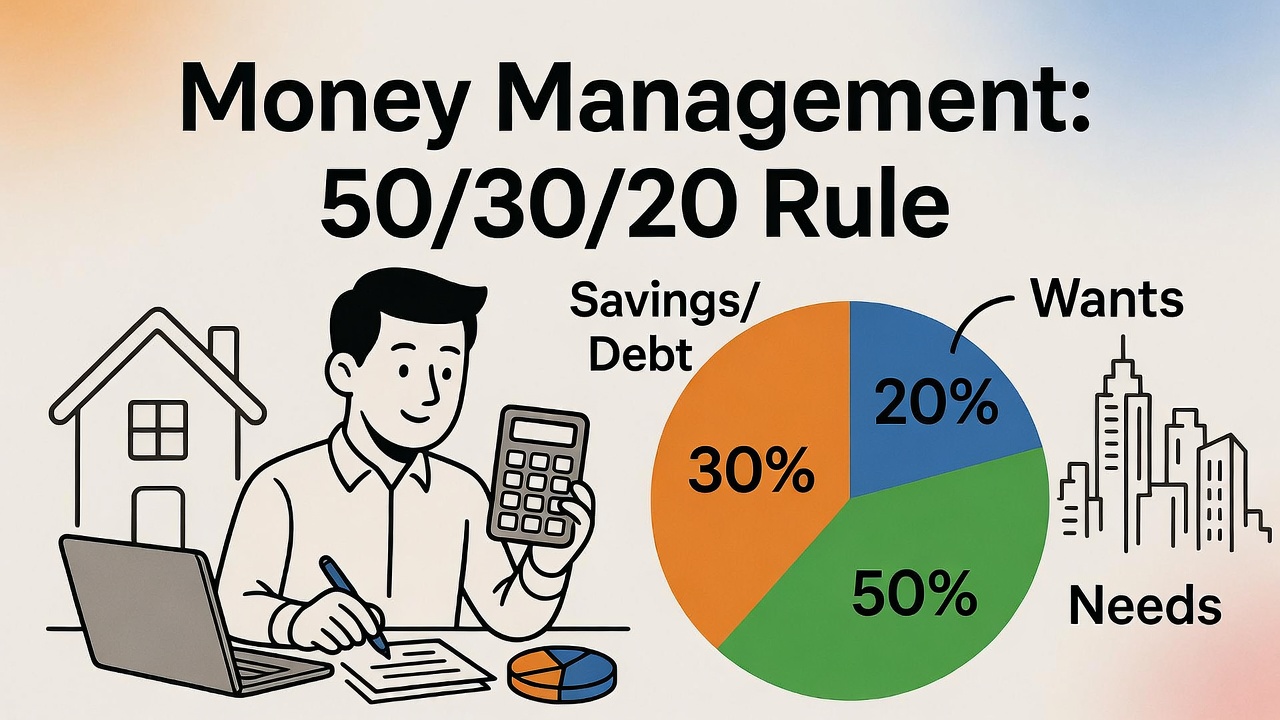

Many people around the world struggle with money worries. However, a simple plan can change that quickly. The 50/30/20 rule offers one of the easiest ways to take control. Moreover, it works for beginners and busy families alike. In addition, this method uses clear percentages, so you avoid complex spreadsheets. Therefore, you can start today and see results in weeks.
First, understand the basics. The rule says to divide your monthly pay after taxes into three parts. Specifically, spend 50 percent on needs, 30 percent on wants, and save 20 percent. Furthermore, this split comes from a popular book by Elizabeth Warren. As a result, millions now use it for steady progress.
What Does Each Part Mean?
Needs: 50 Percent of Your Money
Needs cover the bills you must pay to live safely. For example, these include rent or mortgage, groceries, utilities, transport, insurance, and minimum loan payments. Additionally, childcare or health costs fit here too. However, if this part goes over 50 percent, you may need to cut elsewhere or move to a cheaper home. In short, needs keep you going each day.
Wants: 30 Percent of Your Money
Wants make life enjoyable but are not essential. Moreover, they include dining out, streaming services, hobbies, vacations, or new clothes. Furthermore, gym memberships and concert tickets belong here. Therefore, this part gives you freedom without guilt. Yet, you can always trim it if you want faster savings.
Savings and Debt Payoff: 20 Percent of Your Money
Savings build your future. In addition, this money goes to an emergency fund, retirement accounts, extra debt payments, or investments. For instance, aim for three to six months of expenses in a safe bank account first. Consequently, you feel more secure when surprises happen.
How to Start the 50/30/20 Rule Today
Begin by checking your last month’s bank statements. Next, list every expense and sort it into the three groups. Moreover, use free apps or a simple notebook to track. After that, set up automatic transfers so 20 percent goes straight to savings. Therefore, you hardly notice the change. In addition, review your budget each month and adjust as needed.
A Simple Example in Real Life
Imagine you take home $4,000 each month. Then, needs get $2,000, wants get $1,200, and savings get $800. For needs, you might pay $1,100 rent, $300 food, and $200 transport. Meanwhile, wants could cover $400 eating out and $300 fun activities. Finally, savings build your emergency fund or pay extra on loans. As a result, you stay balanced and move forward.
| Category | Percentage | Amount (for $4,000 income) | Real-Life Examples |
|---|---|---|---|
| Needs | 50% | $2,000 | Rent, groceries, utilities, transport |
| Wants | 30% | $1,200 | Dining out, movies, hobbies |
| Savings/Debt | 20% | $800 | Emergency fund, retirement, extra debt |
Why This Rule Helps So Many People
First, it feels easy because you only track three big groups. Moreover, it leaves space for fun, so you stick with it longer. In addition, the 20 percent savings builds real security over time. Therefore, stress drops and confidence grows. Furthermore, experts from banks and finance sites agree it works well for average incomes.
Tips to Make It Even Better
However, life is not the same everywhere. For high-cost cities, you might shift to 60/20/20 at first. Additionally, talk with family so everyone follows the same plan. Next, cut small costs like unused subscriptions to free up cash. Consequently, you reach goals faster. In short, review and tweak every few months.
Possible Drawbacks and How to Fix Them
On the other hand, some experts say the rule feels too simple for very low or high incomes. For example, low earners may find 20 percent savings hard at first. Therefore, start smaller and raise it slowly. Meanwhile, high earners might save more than 20 percent for bigger security. Nevertheless, the rule still gives a strong starting point for almost everyone.
Final Thoughts on Managing Money
Overall, the 50/30/20 rule makes money management clear and doable. Moreover, it helps you enjoy today while planning for tomorrow. Therefore, give it a try this month. With small steps, big changes happen. In the end, you gain peace and freedom with your money.
Key Citations