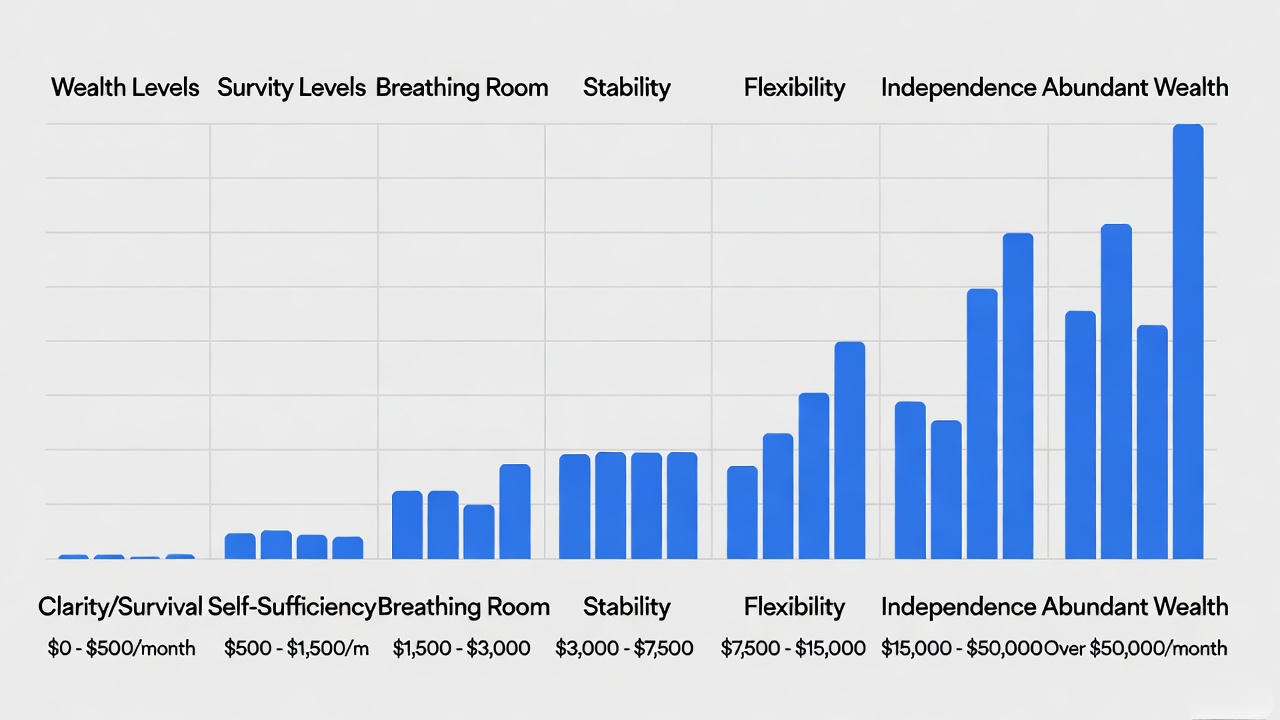

Many people wonder about their financial status. Experts like Vincent Chan and Ramit Sethi have outlined frameworks for the levels of wealth. These levels help you see where you stand and how to move up. However, keep in mind that different sources may vary slightly in names and details. Research suggests a common progression from basic survival to true abundance. It seems likely that most folks get stuck in the early stages due to habits or lack of knowledge. The evidence leans toward building savings and investments as key to advancing.
How to Check Your Level First, calculate your “time wealth” – how long your savings can support you without income. For example, if you have $10,000 saved and spend $5,000 a month, you have two months. Additionally, look at your habits. Do you fear bills? That might mean early levels. Moreover, track debts and investments. If you have none, you are likely stuck low.
Tips to Climb Up Start small. Cut costs and save more. Then, boost income with side jobs. Invest wisely in stocks or properties. However, always learn from reliable sources. It seems likely that consistent effort pays off for most people.
Wealth is not just about money in the bank. Instead, it is about freedom and peace. Many experts, such as Vincent Chan and Ramit Sethi, describe seven levels of wealth. These stages show a path from struggle to plenty. However, the names can differ a bit across sources. For instance, some call the first level “Dependence,” while others say “Clarity.” But overall, the idea stays the same. Additionally, these levels focus on “time wealth” – how long your money can last without work. Therefore, knowing your spot helps you plan better. Moreover, most people around the world face similar money issues, so this framework appeals globally.
First, let’s break it down step by step. You can use this to see where you are stuck and how to move forward. In addition, remember that climbing takes time and smart choices.
Level 1: Clarity or Survival
At this stage, you have enough for 30 days or less. You live paycheck to paycheck. Bills cause big stress, and surprises like car repairs scare you. For example, many workers feel this way. However, you can identify it if you often run out of cash before payday. To advance, cut extras like eating out. Instead, plan meals and track spending. Additionally, start a small savings habit.
Level 2: Self-Sufficiency
Now, you can last 2-3 months without income. You cover basics, but spending still makes you anxious. Moreover, debt might linger. You spot this if small treats feel risky. But to move up, build an emergency fund. Aim for six months’ costs in a safe account. Therefore, use cash for buys to control urges. In addition, avoid new debts.
Level 3: Breathing Room
Here, your buffer is 3-6 months. You can eat out or buy gifts without panic. However, comfort might keep you from pushing more. For instance, this feels like relief after struggle. Additionally, check if daily money worries are gone. To climb, raise income. Try side hustles or skill upgrades. Moreover, learn about investments.
Level 4: Stability
With 6 months to a year covered, you have peace. An emergency fund is strong, and debts are low. Therefore, you can think about big buys like a home. But you might not grow wealth yet. Identify it by no bill fears. However, to advance, buy assets like stocks. As Robert Kiyosaki says, focus on things that make money. In addition, save half of windfalls.
Level 5: Flexibility
Your money lasts 1-2 years. Now, you chase chances, not just safety. For example, you might switch jobs easily. Moreover, this tastes like freedom. Spot it if work feels optional sometimes. But to go higher, cut taxes smartly. Use accounts like 401(k)s. Additionally, invest saved money.
Level 6: Financial Independence
Investments cover costs for 30-60 years. You work if you want, not need. Therefore, you can give or travel freely. However, many dream of this but few reach it. Identify by passive income like rents or dividends. To advance, use debt wisely for assets. For instance, loans for properties.
Level 7: Abundant Wealth
Wealth has no limits. It helps generations and makes world impact. Moreover, you focus on legacy. But this is for the very rich. Additionally, use money for good causes.
To sum up, moving up needs discipline. Start today with small steps. However, seek advice if needed. In addition, track progress yearly.
| Level | Time Wealth | Key Signs | Tips to Advance |
|---|---|---|---|
| 1: Clarity/Survival | ≤30 days | Paycheck to paycheck, high stress | Cut costs, track spending |
| 2: Self-Sufficiency | 2-3 months | Basic cover, anxiety on spends | Build emergency fund, use cash |
| 3: Breathing Room | 3-6 months | Small treats okay, comfort zone | Boost income, side hustles |
| 4: Stability | 6-12 months | No daily worries, solid fund | Invest in assets, save windfalls |
| 5: Flexibility | 1-2 years | Chase opportunities | Tax strategies, invest savings |
| 6: Independence | 30-60 years | Passive income covers needs | Strategic debt for growth |
| 7: Abundance | Limitless | Legacy and impact | Philanthropy, stewardship |
Key Citations: