Why Young Adults Need Simple Financial Books
Young adults often start with little money knowledge. However, books that use easy words and real examples can change that. For instance, they teach budgeting without complex math. Moreover, they help avoid debt traps early on.
How to Choose the Right Book
First, look for short chapters if reading feels hard. Additionally, pick ones with pictures or stories for better understanding. But remember, apply what you learn step by step.
Table of Top Books
| Book Title | Author | Key Topics | Why for Young Adults |
|---|---|---|---|
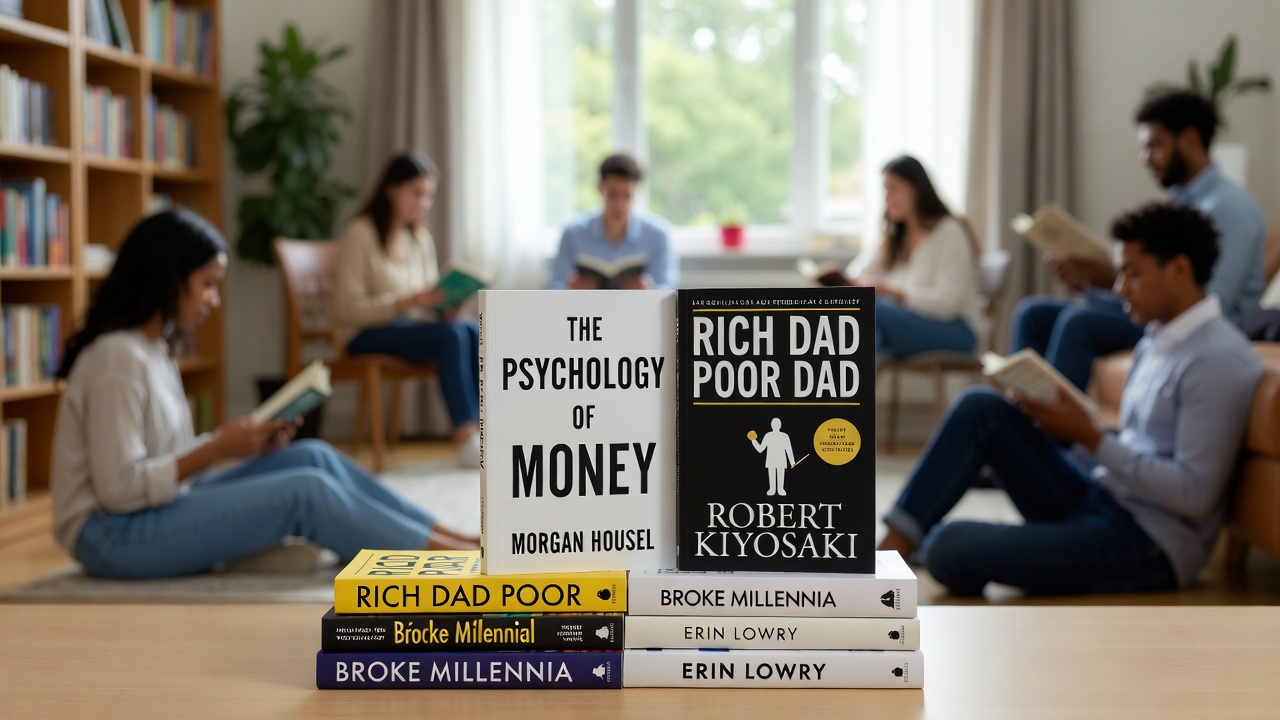
| The Psychology of Money | Morgan Housel | Money mindsets, saving vs. spending | Short, engaging chapters for beginners |
| Rich Dad Poor Dad | Robert Kiyosaki | Assets vs. liabilities, financial mindset | Inspires rethinking money from a young age |
| Broke Millennial | Erin Lowry | Budgeting, debt management | Relatable for low-income starters |
| I Will Teach You to Be Rich | Ramit Sethi | Automating finances, investing basics | Practical systems without strict cuts |
| The Richest Man in Babylon | George S. Clason | Saving habits, parables on wealth | Timeless, simple stories for motivation |
In today’s fast world, young adults face big money challenges like student loans and rising costs. However, a good financial book can make things simple. For example, “The Psychology of Money” by Morgan Housel is a top choice. It uses short stories to explain how people think about cash. Moreover, it shows that wealth comes from habits, not just luck. Therefore, readers learn to save more and spend less on showy items.
But why focus on young adults? First, many start jobs with low pay. Additionally, social media pushes fancy lifestyles. However, books like this teach real wealth is hidden, like in saved funds. For instance, Housel notes, “No one is impressed with your possessions as much as you are.” Thus, it helps avoid wasteful buys.
Another great pick is “Rich Dad Poor Dad” by Robert Kiyosaki. This book compares two dads: one rich, one poor. It explains assets that make money and liabilities that cost it. Moreover, it encourages starting early with investments. But it also warns about bad debt. Therefore, young readers can build a strong base.
In addition, “Broke Millennial” by Erin Lowry speaks directly to those scraping by. It covers splitting bills and handling loans in a fun way. However, it avoids boring lectures. Instead, it uses real stories. For example, it helps with talks about money in relationships. Thus, it fits busy young lives.
Furthermore, “I Will Teach You to Be Rich” by Ramit Sethi offers easy steps. It shows how to automate savings and invest without gimmicks. Moreover, it focuses on enjoying life while building wealth. But it stresses starting small. Therefore, it’s ideal for beginners who fear finance.
Also, “The Richest Man in Babylon” by George S. Clason uses old tales to teach saving. For instance, “Pay yourself first” means save 10% always. However, it’s short and inspiring. Thus, it motivates action.
But these books aren’t just reads; they change habits. Research shows early learning raises savings by 20%. Additionally, visuals in books like “How Money Works” make concepts clear. For example, charts explain banking simply. Therefore, they boost confidence.
However, not all agree. Some say books ignore global issues like inequality. But they still provide tools. Moreover, combining a few gives balanced views. For instance, read Housel for mindset and Sethi for plans.
In summary, these financial books make money simple for young adults worldwide. They use easy words and stories. Therefore, start with one today. But apply tips slowly. Additionally, check libraries or online for access. Thus, build a secure future step by step.