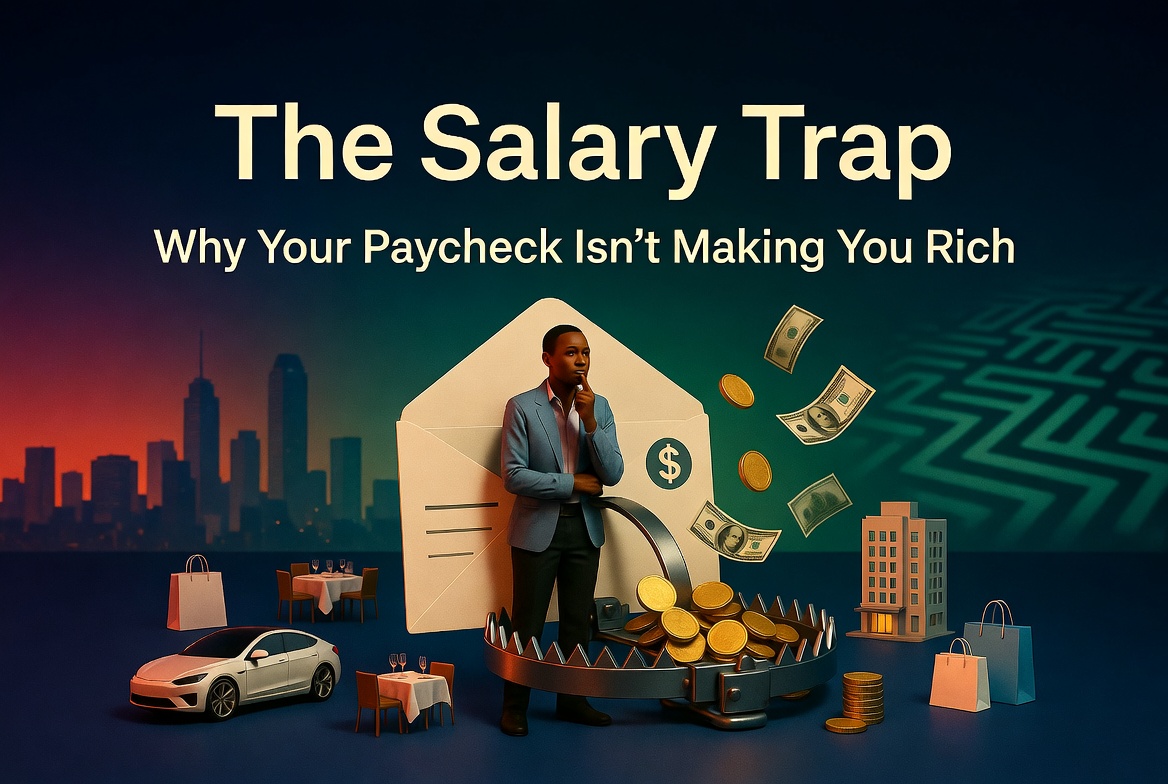

Many people dream of a bigger paycheck to solve money worries. However, the reality often feels different once the new salary arrives. Moreover, this common situation is called the salary trap. Therefore, understanding it can help anyone who wants true financial comfort.
In fact, a good salary alone rarely builds wealth for most workers. Additionally, studies show that spending habits change quickly when income rises. For example, people upgrade their homes, cars, or vacations without noticing how fast the extra money disappears. Consequently, savings stay small even after several raises.
What the Salary Trap Really Means
The salary trap happens when earnings increase but net worth does not grow. Besides this, daily costs rise to match the new pay level. In many countries around the world, including places with strong economies, workers report similar struggles.
Furthermore, taxes take a large share of each paycheck. Moreover, loan payments for houses or education often grow with income. Therefore, little money remains to invest for the future.
Lifestyle Inflation: The Silent Wealth Killer
Lifestyle inflation, also known as lifestyle creep, is one of the biggest reasons the trap works so well. However, it feels harmless at first. For instance, a new salary might lead to dining out more often or buying better clothes. Additionally, these small choices add up fast.
Research suggests that luxuries quickly become seen as necessities. In addition, social pressure to keep up with friends or colleagues makes the change even stronger. Consequently, the joy from extra money lasts only a short time before new bills arrive.
Here is a clear look at how common the problem remains across income groups, based on recent global and U.S. data:
| Income Level | Percentage Living Paycheck to Paycheck |
|---|---|
| Under $50,000 | 57% |
| $50,001 – $100,000 | 36% |
| $100,001 – $200,000 | 25% |
| $300,001 – $500,000 | 41% |
| Over $500,000 | 40% |
| Global workforce average | 57% |
Why Raises Often Fail to Help
Moreover, inflation continues to push prices higher each year. For example, living costs rose about 2.7% to 3% in many places during 2025. Therefore, even a solid pay increase can feel smaller once bills are paid.
Besides this, high earners face extra pressure from bigger fixed costs. In fact, reports show that 40% of people earning over $500,000 still live paycheck to paycheck. Consequently, the feeling of being “rich” never arrives for them.
Global Picture and Real Stories
Around the world, over half of workers report living paycheck to paycheck despite steady jobs. However, the trap looks similar everywhere. Additionally, younger generations often feel it most because housing and education costs have grown faster than wages.
Furthermore, many professionals stay in stressful jobs simply to cover their upgraded lifestyle. Therefore, they miss chances to start businesses or change careers.
Easy Ways to Break Free from the Trap
Fortunately, small changes can make a big difference. First, pay yourself first by moving money to savings or investments the same day you receive your salary. Moreover, review spending each month to catch lifestyle creep early.
In addition, avoid new loans or big purchases unless they truly add long-term value. For example, choose a modest car instead of the most expensive model. Consequently, more money stays available to grow over time.
Besides this, set clear goals such as building an emergency fund or saving for retirement. Therefore, each raise becomes a chance to move closer to freedom instead of higher spending.
Many people who escape the salary trap focus on assets that create income rather than just collecting a paycheck. However, the process takes patience and discipline. Moreover, the results feel rewarding because true wealth comes from choices, not just earnings.
In the end, a salary is a tool, not the final answer. Additionally, anyone can start today by tracking where money goes and making one small saving habit stronger. Therefore, the paycheck trap loses its power when awareness and action take over.
Key Citations
-
- Fortune: “Even workers earning more than $500,000 annually are living paycheck to paycheck” (October 14, 2025) – https://fortune.com/2025/10/14/even-high-income-workers-are-living-paycheck-to-paycheck-broke-personal-finance-wealth-luxury-lifestyle-creep/
- Empower: “Lifestyle creep explained: Monitor spending and splurges” (December 3, 2025) – https://www.empower.com/the-currency/life/lifestyle-creep
- Bank of America Institute: “Paycheck to paycheck: Slowing but growing” (November 2025) – https://institute.bankofamerica.com/content/dam/economic-insights/paycheck-to-paycheck.pdf
- The Economic Times: “High salary trap: Why big earners still feel broke & how to break free” (December 9, 2025) – https://m.economictimes.com/wealth/earn/high-salary-trap-why-big-earners-still-feel-broke-how-to-break-free/the-high-salary-trap-why-big-pay-doesnt-mean-financial-freedom/slideshow/125863050.cms
- ADP Research: “Over half of global workforce living paycheck to paycheck” (June 19, 2025) – https://uk.adp.com/about-adp/press-centre/over-half-of-global-workforce-living-paycheck-to-paycheck.aspx