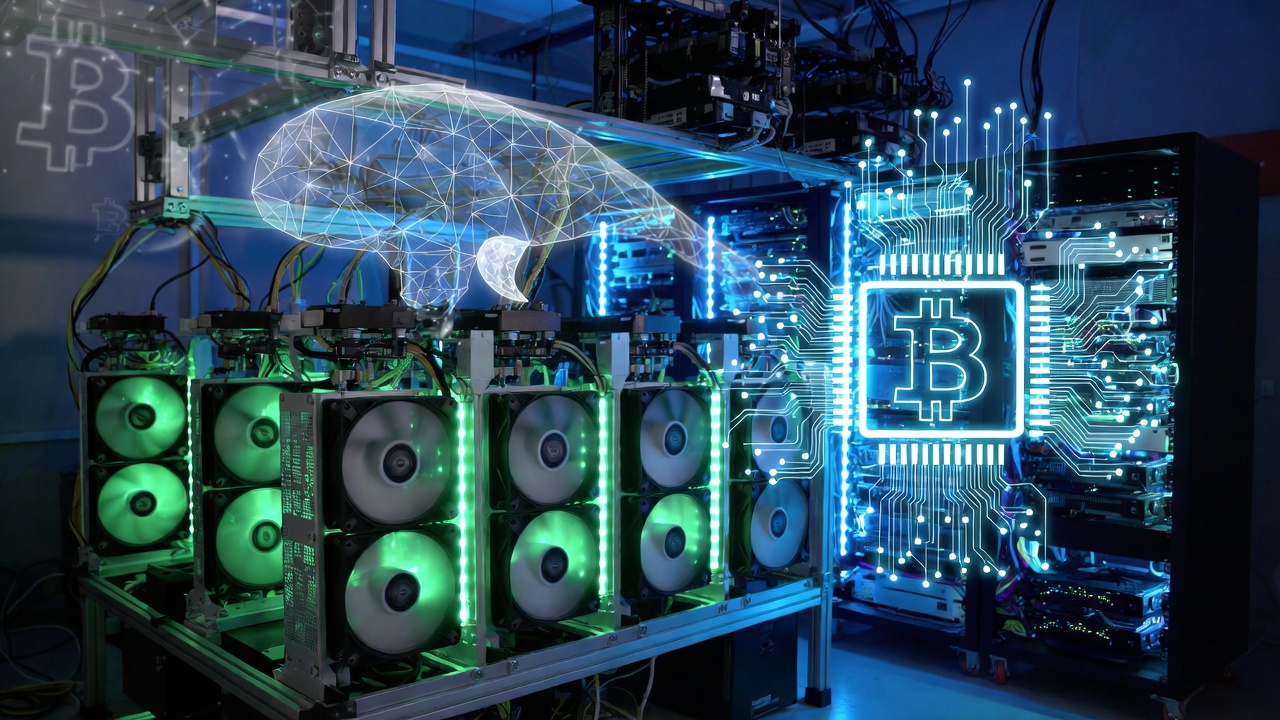

In recent years, US Bitcoin miners have faced big challenges. Profits from mining have dropped sharply after the 2024 halving. As a result, many are now shifting to AI infrastructure. This move uses their data centers for AI computing needs. Moreover, it taps into the booming demand for AI power. However, this pivot brings both opportunities and risks. Therefore, let’s explore the details.
Why Are Miners Making This Shift?
Bitcoin mining has become less profitable. The reward halved to 3.125 Bitcoin per block. Additionally, Bitcoin’s price fell 30% from its 2025 peak to $85,000. Meanwhile, hardware competition has grown. Consequently, only large miners stay in the black. In contrast, AI offers high margins of 80-90%. Furthermore, AI contracts provide steady income for years. For instance, miners have announced over $65 billion in AI deals by October 2025. Thus, this switch makes sense for survival.
Moreover, Bitcoin facilities already have key resources like power and cooling. However, AI needs more stable setups. As such, miners add generators for uptime. Nevertheless, the pivot lowers costs of capital. In fact, public markets reward AI news with stock boosts. Therefore, executives chase these gains. But, some holdouts like American Bitcoin focus on low-cost mining.
Key Companies Leading the Way
Several big names are pivoting. For example, Riot Platforms is repurposing two-thirds of its Texas site for AI. Similarly, Bitfarms aims for a full switch to AI by 2027. Additionally, Core Scientific hosts AI for CoreWeave. Meanwhile, Hut 8 inked a $7 billion lease with Fluidstack, backed by Google. Furthermore, Cipher Mining signed a 15-year deal with Amazon.
In addition, IREN has a $9.7 billion pact with Microsoft. Likewise, TeraWulf partners with Google via Fluidstack for $9.5 billion. Moreover, Cango sold $305 million in Bitcoin to fund AI growth. As a result, mining revenue may drop below 20% by late 2026 for these firms. However, they still expand mining power.
Challenges and Future Outlook
The shift is not easy. For one, AI demands 99.99999% uptime, unlike mining. Therefore, upgrades cost a lot. Additionally, less mining could raise Bitcoin attack risks. Nevertheless, it might boost US AI leadership. In fact, mining laid the groundwork for AI power needs. But, high power use hikes local electricity prices by 30% yearly.
Furthermore, grid delays of 4-6 years push demand for quick solutions. As such, miners act as AI landlords. However, execution risks like debt and timelines loom. In the long run, this creates a new infrastructure class. Meanwhile, some mining may move abroad for cheap energy. Thus, the pivot reshapes both crypto and AI worlds.
| Company | AI Deal Value | Partner | Status |
|---|---|---|---|
| Hut 8 | $7B | Fluidstack (Google-backed) | 15-year lease |
| IREN | $9.7B | Microsoft | AI cloud pact |
| Cipher Mining | $5.5B | Amazon | 15-year lease |
| Core Scientific | Multi-billion | CoreWeave | Hosting GPUs |
| TeraWulf | $9.5B | Fluidstack (Google) | Joint venture |
| Cango | N/A | Internal | Funding via BTC sale |
This trend shows how tech adapts. Overall, it could drive innovation. But, balance is key for both fields.